
This post is available to download as a PDF here, and is available as an audiofile below:
****
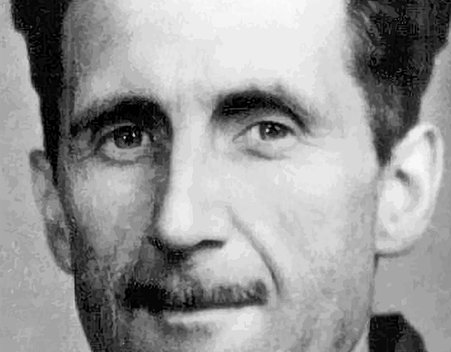
George Orwell (1946) once famously wrote that good prose should be like a window-pane, transparent to the reader and reflecting meaning without the smears of poor construction or the cloudiness of jargon. Academic writing, whether in books or journals, is often accused of being deliberately difficult to read, written in such a way as to display the intelligence of the writer or to mask the lack of substance. This prejudice, popular in the media, might be a result of the supposed English suspicion of the intellectual, those men and women of the mind and letters whose work is the fruit of mental labour and not always readily accessible to our national empirical bent. Interestingly, Orwell himself is one of the leading advocates for such prejudice as witnessed in essays such as ‘Politics and the English Language’ where he takes English intellectuals to task for their slovenly thoughts and slippery language.
But I think the current COVID pandemic has turned this debate from a parlour game into something more serious. After all, for the past two years, we have been witnesses to scientists offering us graph upon graph of hard data and the accompanying academic interpretations. In fairness to Chris Whitty, Jonathan Van-Tam and others, the scientists have made a pretty good fist of getting their virological message across to the general public – better, in many people’s view, than the politicians who are elected to relay such facts to their constituents. But the concern remains – is there often (too often) an impenetrable wall between academics and the general public and, if so, is this a problem for wider debate?
We are living in increasingly specialised worlds, as Edward Said noted in his Reith Lectures. The desire and requirement for ‘new’ knowledge demands that academics drill down into ever-deeper chambers to find those tiny nuggets of wisdom and offer them up with the sophisticated theories necessary to justify the research expenditure. The language used to convey such theories is often equally specialised and restricted to a small audience of fellow seekers. To some extent, perhaps, this is the inevitable division of labour that occurs when the search for knowledge becomes such a huge enterprise. We are no longer living in the era of Leonardo or Francis Bacon when the production of academic material was a fraction of what it is today. Now, there is little room for the polymath. The audience that highly technical work is aimed at today leads to a tendency amongst academics to talk in echo chambers – such is the expansion and finely-grained nature of the enterprise.
So, have we reached a point where the ‘intelligent general reader’ has become extinct, a creature we admire as a relic of a fascinating but distant past? I believe such an attitude is detrimental to academics themselves and the discourses they are engaged in. Truth-be-told, much academic writing would benefit from having an intelligent general reader in mind, whispering into their ear when the academic concerned is drifting into yet another passage of convoluted prose. The ability to relay complex ideas in a way that is intelligible for an informed lay audience is something to be admired rather than sneered at. Engaging with language at this level enables the writer to clarify her or his thoughts, reflect on the connections (or lack of them) between the ideas that are being relayed, and refine the coherence of their central thesis. Academics are writers, whether they consider themselves to be or not – if the concepts they use are confused and ill-defined or the sentences full of clotted grammar and pretentious terminology, then it’s likely the thinking behind them could be at fault as well. Simplicity of prose is hard to achieve (especially when the ideas themselves are difficult to pin down and express) but makes for a stronger piece of work that is more likely to be read properly (rather than just skimmed for a reference).
Orwell, at the end of ‘Politics and the English Language,’ offers writers a series of maxims they should abide by in their efforts to write simply and clearly. Controversially, he suggests ‘Never use a foreign phrase, a scientific word or a jargon word if you can think of an everyday English equivalent.’ Although there are times when such words and terms are necessary (and Orwell acknowledges this in the essay), it probably wouldn’t take long in any academic journal to find countless examples of writing that unwittingly contravenes this and other advice Orwell offers. If Orwell remind us of anything, it is that poor writing is a result of poor thinking. And it was not just Orwell who objected. Brand Blanshard, a contemporary of Orwell, spoke of philosophy as ‘a peculiarly stubborn effort to think clearly,’ taking philosophers such as Kant and Hegel to task for the lack of clarity in their writing. Academics owe it to themselves and their reading publics to strive for more.
References
Blanshard, B. (1954), On Philosophical Style. Manchester: Manchester University Press.
Orwell, G. (1946a), ‘Politics and the English Language’, in Davison, P. (ed.) (2017), George Orwell: The Collected Non-Fiction. London: Penguin.
—. (1946b), ‘Why I Write’, in Davison, P. (ed.) (2017), George Orwell: The Collected Non-Fiction. London: Penguin.

I agree! In the interests of simple language..I will say no more.