(Above is an audio recording of the blog post)
The datafication of education through digital technologies is rapidly advancing (Gulson et al., 2022; Sellar & Thompson, 2016). In this blog, I argue that educational subjects, such as teachers and learners, are being transformed through their connections with emerging technologies, including generative AI.
Current discussions on technology in education tend to focus on humans as primary subjects (An & Oliver, 2020; Berendt et al., 2020; Ifenthaler et al., 2024; Organisation for Economic Co-operation and Development [OECD], 2026). To understand this transformation, we need to move beyond the conventional binary opposition that treats humans and technology as separate entities.
Park (2022) criticises traditional substantialist thinking that views technology as an independent causal force acting on humans and proposes a relational framework constituted through the relationships among humans, technology and education. Educational technology can now be positioned not merely as a substitute for humans or an intermediary tool but as an active agent that transforms human dialogue and thought through algorithmic intervention (Katsenou et al., 2025).
From this perspective, educational subjects such as teachers and learners are already constituted through their relationships with educational technologies, rather than existing as observers standing outside them. We are part of these relations and must reflect on how they may be transforming us. Therefore, this article draws on Deleuze and Guattari’s (1987) concept of assemblage to capture this generative transformation.
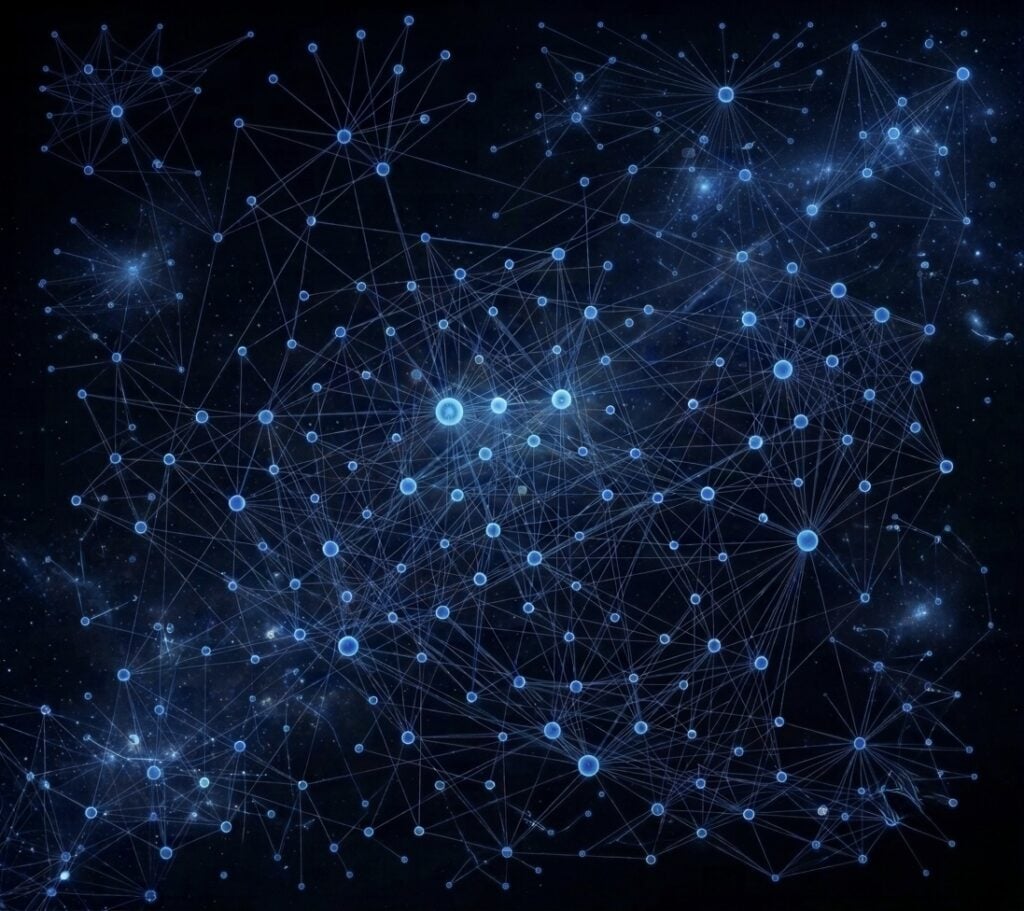
Deleuze and Guattari (1987) employ the concept of assemblage to describe a network of relationships where diverse elements – humans, technologies, institutions, language and material objects – connect and interact to create a specific function or effect (Nail, 2017). It is crucial to recognise that an assemblage is more than just a mix of diverse elements. What matters is the arrangement of these elements and the possibilities that arise from their relationships. The key question is how different elements connect, affect one another and create new capacities and meanings through their relationships.
In education, assemblage describes configurations that connect and operate objects, people, practices, concepts, emotions and codes (Sellar & Thompson, 2016). For example, the authors describe how testing practices, teachers, students and computerised adaptive testing tools connect with expression forms such as anxiety, computer languages and information ontologies. This connection creates a mechanism that transforms data into information and regulates educational practices.
Teachers and learners, when coexisting with technology, also connect with other elements, including practices, assessment, educational goals, curricula and emotions. These relations already embed them and constitute part of the process through which they continuously construct these relations. Therefore, we can ask: within these relationships that exist as an assemblage, what are teachers becoming? And what are learners becoming?
Understanding teachers as assemblages reveals a shift in their identities from carers to managers. Educational technologies should not be understood simply as acting upon teachers through a one-way causal relationship. Rather, their use in datafication is connected with the demands for accountability and performativity placed on teachers, which have been increasingly highlighted by neoliberal educational reforms. These factors are reshaping teachers’ roles and identities (Ball & Grimaldi, 2021; Grange, 2024).
Teaching has involved accompanying children in their development and understanding their individual backgrounds and experiences through practices of ‘care’. However, neoliberal educational policies increasingly require teachers to demonstrate efficiency, measurable outcomes and accountability (Tsang & Qin, 2020). The datafication of education and emerging technologies reinforce these demands by making them more visible and quantifiable (Ball & Grimaldi, 2021). Consequently, the role of teachers is shifting from primarily understanding and supporting children to monitoring learning progress and outcomes through data, adjusting and managing educational practices accordingly.
Teachers are not merely passively subjected to datafication (Holloway & Londe, 2020). Teachers are also generating data themselves (Sellar & Thompson, 2016; Qazi & Pachler, 2025); the are both subjects shaped by data and active participants in generating that data. Within relations in which heterogeneous elements such as teachers, data, assessment systems, educational policies and ideology become connected, the very nature of the teacher as an educational subject is being reconfigured.
The learner is also undergoing a significant transformation. Previously, educational data, such as test scores and report cards, were intermittent, recorded only at particular points in time, such as term ends, and did not extend beyond school limits. Today, learning applications and tablet devices continuously datafy both learning outcomes and the problem-solving process in real time, anytime and anywhere (Gulson et al., 2022; Sellar & Thompson, 2016).
Interestingly, Decuypere and Simons (2020) argue that, within such environments, learners are becoming ‘opportunistic’. Learners no longer progress in a linear fashion towards specific long-term goals. Instead, they adapt themselves in real-time to the system’s data, such as ‘this is where you are struggling’ or ‘try this question next’, becoming opportunistic learners.
The system calculates the gap between the ‘you that you are now’ and the ‘predicted optimal you’ and immediately presents the next task. The learner then solves another problem to close that gap. At first glance, this appears to represent progress towards an ‘optimal self’. However, the more learners act to optimise themselves, the more ‘new data’ they generate, and the system presents another new gap or task in response. Thus, learners become subjects embedded within this loop. Additionally, they become part of an endless circuit of production and control, repeatedly moving through the same circuit in an attempt to fill their deficiencies (Decuypere & Simons, 2020; Sellar & Thompson, 2016). Although education is inherently unpredictable (Biesta, 2013), learning is increasingly transformed into the pursuit of a predictable and data-defined ‘perfect’ self (Decuypere & Simons, 2020; Sellar & Thompson, 2016).
Contemporary education may appear to be creating something new, while in reality it may simply be repeating predictable cycles as part of the larger movement of educational statistics or algorithms. We, as researchers of education, are also part of this assemblage. Recognising our existing relationships with technology and other elements allows us to move beyond the binary opposition between technology and humans.
References
An, T., & Oliver, M. (2020). What in the world is educational technology? Rethinking the field from the perspective of the philosophy of technology. Learning, Media and Technology, 46, 6–19. https://doi.org/10.1080/17439884.2020.1810066
Ball, S., & Grimaldi, E. (2021). Neoliberal education and the neoliberal digital classroom. Learning, Media and Technology, 47, 288–302. https://doi.org/10.1080/17439884.2021.1963980
Berendt, B., Littlejohn, A., & Blakemore, M. (2020). AI in education: Learner choice and fundamental rights. Learning, Media and Technology, 45, 312–324. https://doi.org/10.1080/17439884.2020.1786399
Biesta, G. J. J. (2013). The beautiful risk of education. Routledge. https://doi.org/10.4324/9781315635866
Decuypere, M., & Simons, M. (2020). Pasts and futures that keep the possible alive: Reflections on time, space, education and governing. Educational Philosophy and Theory. https://doi.org/10.1080/00131857.2019.1708327
Deleuze, G., & Guattari, F. (1987). A thousand plateaus: Capitalism and schizophrenia (B. Massumi, Trans.). University of Minnesota Press.
Grange, L. L. (2024). The many sides to performativity. Journal of Education. https://doi.org/10.17159/2520-9868/i96a02
Holloway, J., & Londe, P. G. (2020). The performative to the datafied teacher subject: Teacher evaluation in Tennessee. In A. Wilkins & A. M. Olmedo (Eds.), World yearbook of education 2021 (pp. 262–278). Routledge. https://doi.org/10.4324/9781003014164-18
Ifenthaler, D., Majumdar, R., Gorissen, P., Judge, M., Mishra, S., Raffaghelli, J., & Shimada, A. (2024). Artificial intelligence in education: Implications for policymakers, researchers, and practitioners. Technology, Knowledge and Learning, 29, 1693–1710. https://doi.org/10.1007/s10758-024-09747-0
Katsenou, R., Kotsidis, K., Papadopoulou, A., Anastasiadis, P., & Deliyannis, I. (2025). Beyond assistance: Embracing AI as a collaborative co-agent in education. Education Sciences. https://doi.org/10.3390/educsci15081006
Kitchin, R., Davret, J., Kayanan, C. M., & Mutter, S. (2025). Assemblage theory, data systems and data ecosystems: The data assemblages of the Irish planning system. Big Data & Society, 12. https://doi.org/10.1177/20539517251352822
Nail, T. (2017). What is an assemblage? SubStance, 46(1), 21–37. https://doi.org/10.3368/ss.46.1.21
Organisation for Economic Co-operation and Development. (2026). OECD digital education outlook 2026: Exploring effective uses of generative AI in education. OECD Publishing. https://doi.org/10.1787/062a7394-en
Park, E.-J. (2022). For technological literacy education: Comparing the asymmetrical view of Heidegger and symmetrical view of Latour on technology. Studies in Philosophy and Education, 41, 551–565. https://doi.org/10.1007/s11217-022-09841-9
Qazi, A., & Pachler, N. (2025). Conceptualising a data analytics framework to support targeted teacher professional development. Professional Development in Education, 51, 495–518. https://doi.org/10.1080/19415257.2024.2422066
Sellar, S., & Thompson, G. (2016). The becoming-statistic. Cultural Studies ↔ Critical Methodologies. https://doi.org/10.1177/1532708616655770
Tsang, K. K., & Qin, Q. (2020). Ideological disempowerment as an effect of neoliberalism on teachers. Power and Education, 12(2), 204–212. https://doi.org/10.1177/1757743820932603