This post is available to download as a PDF here.
***
The British government doesn’t want us talking about race. More precisely: it doesn’t want us talking about structural and systemic racism as sociopolitical realities that intersect with other axes of identity. Certainly, it doesn’t want such talk in educational spaces.
This isn’t news. The last and current government’s adherence to a “bad apple” theory of racism (it’s not a structural problem, but one caused by a minority of racist individuals) and its rejection of so-called “left-wing identity politics” are parts of its current favourite concept war on woke.1 One of the government’s tactics in that war is to attempt, directly and indirectly, to curb antiracist dialogue. In the last two years, the government has accused antiracists of trying to “re-write” history (though rewriting as corrective or alternative perspective is exactly the job of historians, as Hannah Rose Woods points out); denounced critical race theory as a “dangerous and divisive ideology”; commissioned a report that repudiates structural racism and urges schools to teach positive-spin histories of empire and colonialism; forbidden schools to use materials published by what it considers extremist, especially anticapitalist, groups; threatened to withdraw funding from national museums should they remove controversial artefacts from public display; issued guidance to schools on their duties of political impartiality, including – alarming because nonsensical – impartiality on issues of racism and antiracism.
All the while the government has been narrowing the scope of critical debate and dialogue in educational institutions, it has also been diligently chipping away at our rights.
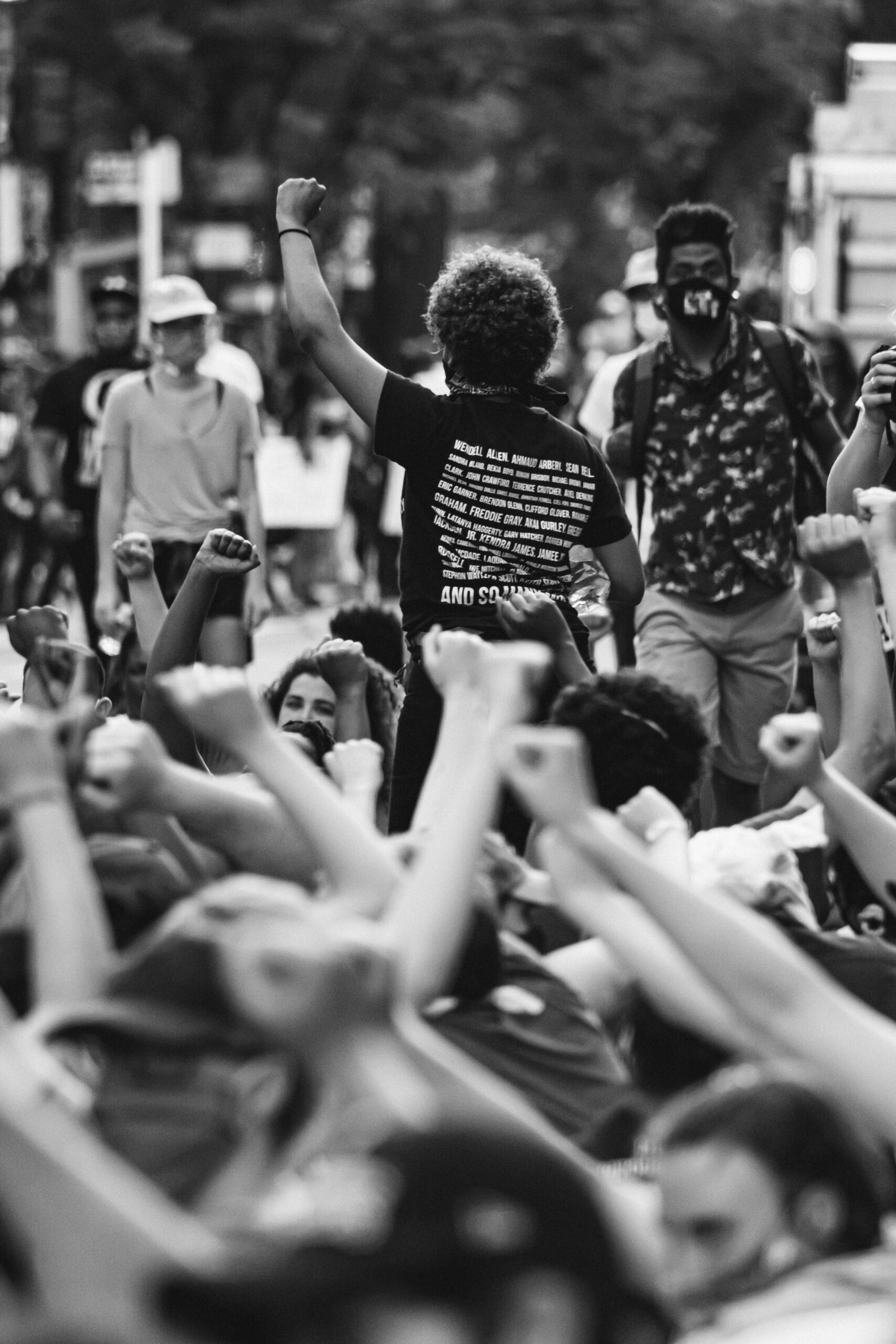
When I first wrote about the government’s “creeping authoritarianism” for this site in March 2021, I set obviously educational examples in the context of the government’s Policing Bill, which had come under renewed public scrutiny following the police’s violent treatment of activists who’d gathered in remembrance of Sarah Everard, the woman murdered by a police officer in March 2021. The Bill, which passed into law in April 2022, expands police powers; threatens the right to protest and, through anti-trespass law, Gypsy, Roma and Traveller communities’ nomadic ways of life;2 and, according to Liberty, it “will hit those communities already affected by over-policing hardest, particularly young Black men.” Fourteen anti-protest measures were defeated before the Bill became an Act, only to be reintroduced to the government’s Public Order Bill, which – Liberty again – “risk[s] criminalising anyone who takes to the streets for a cause they believe in.”
The Policing Act and Public Order Bill are just two of a number of government attempts to pass rights-reducing legislation. Others include the Electoral Integrity Bill, the Human Rights Bill (or Rights Removal Bill, as Liberty calls it, delayed at the time of writing), the Judicial Review Bill, and the Northern Ireland Protocol Bill. Each is complex with its particular aims, of course, but there is a clear pattern: the expansion of central government’s powers and reduction of its accountability; the weakening of the principle of separation of powers; and the steady erosion of democratic and human rights. As Liberty’s Emmanuelle Andrews said at Runnymede Trust’s recent We Move Summit, the erasure of human rights affects everyone, though not everyone equally. Those who are already marginalized and minoritized, who already live with precarity, will, as always, be hit first and hardest.
To come back to the beginning, to what can and can’t be said in educational institutions: at the same time as government is trying to reduce the scope of critical dialogue in schools, elsewhere it is seemingly pressing a so-called free-speech agenda (the Rights Removal Bill and possible introduction of “free speech champions” to universities, for example). Strange, one wants to say. Yes, but the strangeness lays in how unsurprising, how normal, such contradictions have become when they come from government.
It remains to be seen and heard who will be allowed freely to express what in schools, colleges, universities, and other educational settings. Meanwhile, many teachers, despite growing personal-professional risks, continue to have politically and ethically important conversations with their students: activism in the curricular and institutional interstices.
For all the fine art HE has made of bureaucracy, university teachers in England currently have a freer hand than most school teachers when it comes to curriculum-, assignment-, and assessment-design. The university classroom is still relatively free to become or, perhaps, continue to be an activist space, a lab for the kind of anger that, in The Case for Rage, Myisha Cherry calls Lordean rage (in honour of Audre Lorde and her essay “The Uses of Anger”).
Anti-racist, collectivist, future-oriented because geared towards sociopolitical change, Lordean rage is action-centred, part of and framed by an ethical commitment to fighting violence towards the disenfranchized and the marginalized. It is rage that leads persons from diverse and historically minoritized backgrounds to run for office, writers to take up their pens in protest.
That I can write and post this without fear I’m grateful, because that freedom and the relative intellectual freedoms currently enjoyed in universities aren’t guaranteed. While we still can, we should preserve the university as a space of political, intellectual, and aesthetic challenge, resistance, and risk. We should teach anger, in the tradition of Cherry and of Audre Lorde.
Endnotes
References: all references hyperlinked in main text.
Header image by Gayatri Malhotra on Unsplash